



time:2026-05-29 10:54:22 views:
In industrial automation, a display is more than just a screen. It is the control point that operators rely on throughout every shift. Using a monitor that cannot withstand industrial conditions can lead to downtime, inaccurate touch input, or premature component wear.
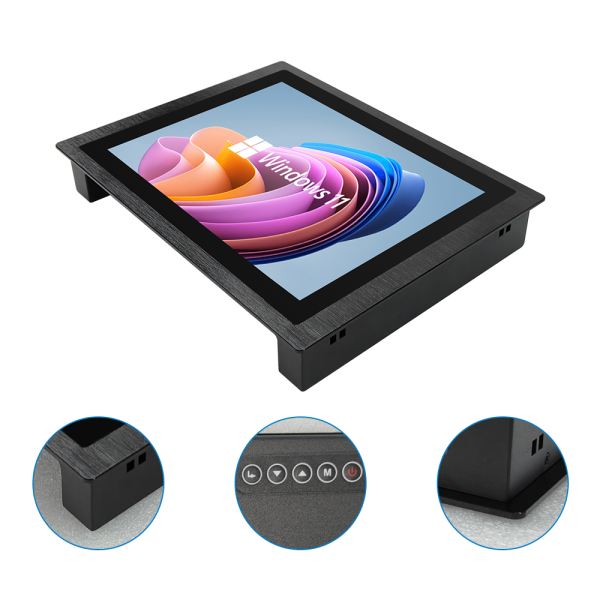
A reliable 12.1 inch industrial touch screen monitor by INNODA is designed to handle harsh environments while maintaining visibility, touch responsiveness, and operational stability. Choosing the right monitor requires evaluating protection, optical design, temperature tolerance, and interface compatibility.
Why Standard Displays Fail in Industrial Environments
Commercial monitors are built for offices or retail environments, not factories or outdoor terminals. Common failure points in industrial settings include:
Moisture entering the display housing
Internal condensation under temperature fluctuations
Reduced brightness under strong lighting
Touch inaccuracies from water or oil
Shortened backlight life during continuous operation
Plastic housings warping under heat
Industrial-grade monitors address these issues through reinforced construction and purpose-built hardware.
IP65 Protection for Dust and Water
A IP65 industrial touch screen monitor prevents dust, coolant mist, and water from entering sensitive electronics. This is essential for:
CNC workshops
Food and beverage lines
Outdoor or marine control stations
Industrial monitors use:
CNC-machined aluminum alloy housings
Waterproof front bezels with continuous rubber seals
Reinforced mounting structures
This approach enhances durability and reduces the risk of internal damage over time.
Optical Bonding for Clear Visibility
Many standard touch displays leave an air gap between the LCD and cover glass. This can cause fogging under humidity changes.
Optical bonding eliminates the air gap by attaching the touch layer directly to the LCD. Benefits include:
Reduced internal reflections
Improved sunlight readability
Prevention of condensation
Increased structural strength
Improved contrast
Anti-glare treatment further enhances visibility in bright light, ensuring operators can read information clearly in industrial settings.
High-Brightness Displays for Industrial Use
Standard office monitors have brightness levels that are insufficient for many industrial environments.
A sunlight-readable industrial monitor delivers brightness levels from 800 to 1000 nits, which is suitable for:
Outdoor kiosks and ticketing systems
Marine and fleet control stations
Warehouse loading areas
Semi-outdoor production lines
This ensures data is always legible without straining operators’ eyes.
Capacitive Touch for Reliable Operation
Modern HMI systems benefit from projected capacitive (PCAP) touch technology because it provides:
Multi-touch gesture support
Accurate coordinate tracking
Operation with gloves
Water and oil resistance
Controllers are tuned to ignore false touches caused by moisture or surface residue, making them suitable for environments where gloves or liquids are present.
Wide Temperature Range
Industrial monitors are designed for reliable operation between -20°C and 70°C. This ensures consistent performance in:
Outdoor equipment
Transportation terminals
Cold storage
Steel and metal processing facilities
Thermal stability helps maintain backlight life and touch accuracy.
Interface Compatibility
Industrial systems often combine modern and legacy equipment. Monitors support:
VGA for older controllers
DVI for industrial PCs
HDMI for newer embedded systems
USB touch communication
Flexible VESA mounting allows installation in enclosures, kiosks, or operator panels without redesign.
Deployment Scenarios
CNC Operator Panels: withstand vibration, coolant exposure, and continuous operation.
Industrial HMI Stations: monitor production lines and process control.
Transportation and Fleet Systems: provide reliable terminals for dispatch centers and marine control stations.
Outdoor Kiosks: maintain visibility under direct sunlight.
Food Processing Equipment: support washdown procedures with waterproof front panels.
Commercial vs. Industrial Displays
| Feature | Commercial Desktop Monitors | INNODA Industrial Displays |
| Enclosure | ABS Plastic | CNC Aluminum Alloy / Steel |
| Water/Dust Protection | None | IP65 Front Bezel |
| Brightness | 200–300 nits | 800–1000 nits |
| Touch | Resistive or basic capacitive | Multi-touch PCAP |
| Operation | 8 hours/day | 24/7 continuous |
| Lifecycle | 12–18 months | 5+ years component availability |
Industrial monitors are designed to maintain reliability under conditions where commercial monitors fail.
Conclusion
Selecting a 12.1 inch industrial touch screen monitor ensures reliable performance in demanding industrial environments. Features like sunlight-readable display, IP65 waterproofing, capacitive multi-touch, and wide temperature support reduce downtime and maintain accurate control. Investing in a purpose-built monitor supports stable operation, improves operator efficiency, and prolongs equipment life.

